
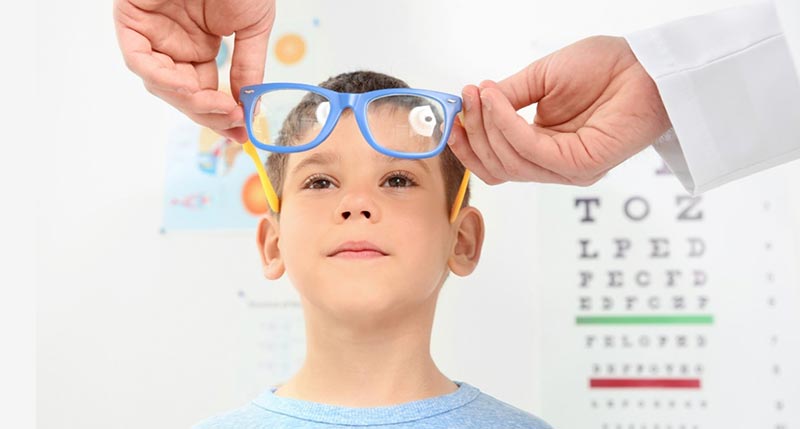
Your child’s vision shapes their life experiences: Whether they are learning to read, seeing animals at the zoo for the first time, or playing catch, how they learn and develop is influenced by their ability to see clearly.
There is a rising incidence of myopia (nearsightedness, meaning the inability to see things far away) in children and adolescents. Myopia, in fact, it is the most widespread visual impairment globally. But there’s good news about nearsightedness: There are eye-friendly habits that can lower the chances of your child having myopia if you start preventive eye care early in their lives.
How and When does Myopia Develop?
The shape of a child’s eyes is determined early in life – from birth to about age 6. Most children are born farsighted, meaning they can focus on things at a distance. As they grow, the shape of the eye elongates to align with the lens and cornea so that images project directly on the retina and create normal vision. If the process of elongation growth goes too far, or if the cornea is overly curved, the focal area rests slightly in front of the retina, causing blurred distance vision, also called myopia.
Children with myopia often become more nearsighted as they grow, especially between ages 7 to 12. Myopia typically continues to progress through the teenage years and into the early 20s before stopping.
You can help lower the chances of your child developing severe myopia in childhood and adolescence by helping them practice eye-healthy habits.
How Can I Reduce My Child’s Risk of Severe Myopia?
Knowing the cause of myopia can help you guide your child to better visual habits.
One thing that you can’t control is DNA, and myopia does have a strong genetic component. If both parents are myopic, the risk of a child developing myopia is about 60% versus only 20% if neither parent has myopia.
There are, however, two environmental factors that can trigger myopia development and progression. Both factors —limited time outdoors and increased time indoors – can be controlled by you and your child.
Let’s take a look at why each of these factors contributes to myopia.
- Limited time outdoors. Research shows that developing nearsightedness is associated with a lack of dopamine – the brain chemical that helps nerve cells communicate. Enhanced exposure to bright outdoor light increases dopamine in the retina, which helps to regulate and normalize eye growth and elongation. Studies show that the more time a child spends outside, the less likely they are to have myopia.
Bottom line? Encourage your kids to get outside every day: Walk the dog, shoot some hoops, or ride a bike. Studies have established that spending two hours a day outside can reduce the likelihood of myopia by 20 –30%. Plus, it encourages an overall healthier lifestyle.
- Increased time indoors. Study after study shows that excessive amounts of time spent on electronic devices increases the risk and severity of myopia. No question. We’re all aware that kids today spend an immense amount of time on their laptops, tablets, phones and other screens. School-age children use technology positioned 12”-18” from their eyes to read and write for multiple hours every day. Add in the time they spend on social media, playing games, and watching reels. It comes out to a staggering amount of time that kids’ eyes are performing intense “near-work.”
So, as a parent, what can you do to protect your child’s vision without discouraging learning or fun?
- The 20-20-20 Rule – Establish a set break from their devices every 20 minutes. They should look at an object 20 feet away for at least 20 seconds, and perform a few exaggerated blinks to help lubricate the eyes. Help your child get into the eye-healthy habit of giving their eyes a rest from both electronics and the printed page.
- Establish (and enforce!) a daily maximum amount of time your kids are allowed on their screens for play and entertainment.
Myopia and Other Eye Conditions
The importance of early intervention and parental guidance can ultimately help your child avoid the social and emotional challenges that children with poor vision experience in school and social settings. Addressing the progression of myopia in children and teens can optimize their visual system and support overall learning and emotional development.
Early intervention can significantly diminish the progression of severe myopia. That can lower the risk of other vision-threatening eye conditions including retinal detachment, glaucoma, myopic maculopathy, and cataracts that may develop later in life and cause visual impairment and reduced quality of life.
The most important first step in addressing myopia progression is to schedule your child’s comprehensive eye exam with your optometrist. Your eye doctor may prescribe special contact lenses or eyeglasses to slow the progression of myopia in your child. Options vary by age, prescription, and goals. You and your eye doctor can pick the plan that works best for your child.
By making some positive lifestyle changes, you can advocate for your child’s vision and pump the brakes on myopia!
Contact our office today. We look forward to helping your children enjoy healthier and clearer vision.